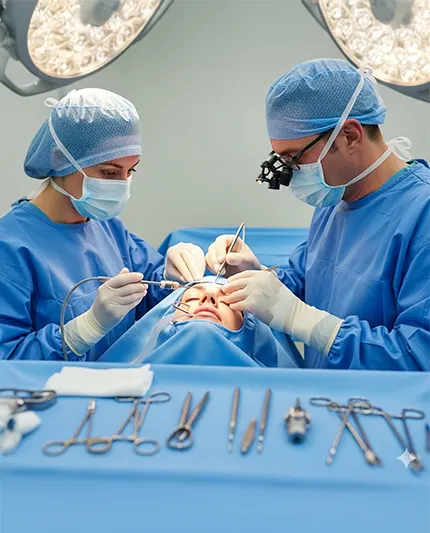
Facial Feminization Surgery (FFS) is not one surgery; it is a series of surgeries created to reshape features that are typically perceived as masculine and soften them into a more feminine state. It is intended to make the face appear more feminine. It presents as cosmetic and personal for many trans women and non-binary individuals. The surgery helps reduce gender dysphoria and creates a sense of ease and comfort in everyday life.
The point is never to erase your face, but to create balance and highlight traits that feel true to who you are.
There’s no fixed checklist. A treatment plan is shaped around the individual. Some of the most common procedures include:
Often, surgeons combine bone reshaping with soft-tissue work for the most natural results.
Some patients have several procedures in one sitting. Others do it in stages. Staging can make recovery easier and give surgeons the chance to adjust results once the first changes have healed. The decision depends on overall health, the number of procedures, and the surgeon’s judgment.
Healing takes time, and no two patients are exactly alike. In the first week, swelling and bruising are at their peak. By two or three weeks, you’ll feel more comfortable and may return to light activity. Most people resume regular routines within a couple of months, though subtle swelling can hang around for longer.
Patience is essential, final results can take close to a year.
The changes are usually subtle but powerful: a smoother forehead, refined nose, narrower jaw, fuller lips or cheeks, and a softer neck profile. More than appearance, patients often describe feeling more comfortable, more confident, and less self-conscious in social settings.
FFS, like all surgery, can have risks. These can be an infection, bleeding, prolonged swelling, scarring, or numbness as a result of nerve irritation. Rarely, some patients may require a revision or touch-up procedure to perfect the results. Using an experienced surgeon decreases these probabilities.