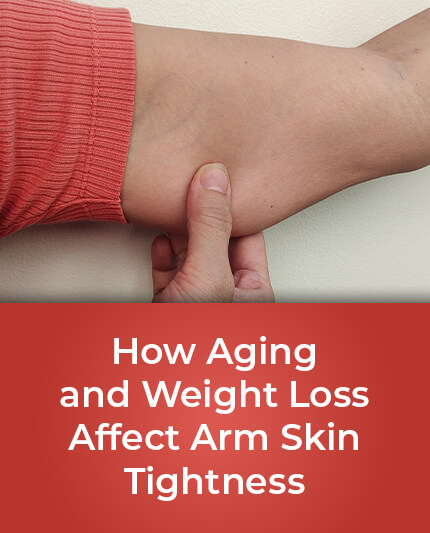
It’s frustrating to deal with loose, sagging skin on your arms, especially when you’ve been consistent with workouts and diet. Arm fat tends to be stubborn, even when the weight comes off.
In most cases, this comes down to two factors: aging and weight loss, often working together.
Skin holds its shape because of two proteins: collagen and elastin.
Collagen keeps things firm, and elastin lets skin stretch and snap back. Your body starts producing less of both as early as your mid-20s, with collagen dropping roughly 1% per year after 30. Elastin, once damaged, doesn’t regenerate the way collagen sometimes can.
On top of that, fat beneath the arm skin shifts and thins unevenly with age, making any existing looseness more obvious. This, along with hormonal imbalance during menopause, accelerates the problem even further.
Even if your weight hasn’t budged, aging and skin sagging can still catch up with you. It’s structural, not a reflection of effort.
When you gain weight, your skin stretches to accommodate the extra volume. If that weight stays on for years, or the gain is substantial, the elastic fibres sustain permanent damage.
People who lose weight through bariatric surgery or aggressive dieting tend to see more pronounced sagging because the skin gets no time to adapt.
You’d think losing the same 30 kilos would produce the same outcome for everyone. It doesn’t. Your skin’s response depends on factors that were largely decided before you ever stepped on a scale.
Understanding these loose arm skin causes helps move the conversation toward informed decisions rather than frustration.
Strength training builds muscle beneath the skin, and that added volume can make arms appear firmer and more sculpted.
For mild laxity, it genuinely helps. But muscle and skin are separate structures. Growing one doesn’t shrink the other. If there’s a visible drape of excess skin, no workout routine will eliminate it.
Non-surgical arm skin tightening options like radiofrequency, ultrasound, and laser treatments have gained ground as alternatives. They encourage fresh collagen production and can provide modest tightening for patients with mild laxity and decent baseline skin quality.
But there is a limit. These treatments cannot remove a physical surplus of skin, and they won’t produce dramatic results for significant post-weight-loss sagging. That level of correction requires something more direct.
When creams, workouts, and in-clinic treatments aren’t producing the results you need, brachioplasty surgery goes after the root of the problem.
An arm lift procedure involves removing the excess skin from the upper arm, tightening the tissue beneath it, and reshaping the contour so it sits cleaner and smoother. In some cases, liposuction is combined with the excision to refine the overall result.
The people who seek this out typically share a few things in common.
Brachioplasty isn’t about chasing perfection. It’s about getting your body to reflect the work you’ve already put in.
The difference is visible from the moment bandages come off.
Scarring is part of the process. The incision runs along the inner arm, and while scars fade over the months that follow, they are permanent. Recovery takes two to three weeks for everyday activities, with strenuous exercise off-limits for four to six weeks. The best outcomes come when patients are at a stable weight before surgery, since fluctuations afterwards can stretch the remaining skin.
Skin that hasn’t improved naturally within six months to two years after weight loss is unlikely to tighten further on its own. That’s typically when patients start seriously considering whether surgical correction is the right step.
Loose arm skin isn’t something you earn through bad choices. It’s how your body responds when its internal structure shifts, through aging, weight loss, or a bit of both happening at once.
If the looseness is mild, regular exercise and non-invasive skin treatments can go a long way. Moderate sagging sometimes responds well to a mix of approaches. But when there’s a noticeable surplus of skin that hasn’t budged in a year or two despite your best efforts, brachioplasty surgery is usually what it takes to see a real difference.